Why Creative Now Drives Your Cost Per Lead On Meta
If you run a lead generation business, the way your Facebook and Instagram ads find customers has changed more in the last two years than in the decade before. Results used to come from settings like chosen interests, lookalike audiences and clever campaign splits, and Meta has since automated almost all of it. The targeting now happens through the content, so the ads you put into the account have more say over your cost per lead than any setting your agency or team can change.
For a New Zealand lead generation business, that changes how many ads you need, how different they should be and how to judge them.
What changed inside Meta
At the end of 2024 Meta introduced Andromeda, the system that now decides which ads are shown to which people. It reads each ad, including the visuals, the words on screen, what is said and the caption, and predicts who is most likely to respond. You no longer choose the audience and then add the ads. You add the ads and Meta finds the people.
If your ad talks about the problems electricians run into on a job, Meta will find electricians without being told to. Each genuinely different ad opens up a new group of people, while ads that look alike get treated as one. In September 2026, agency executives told Marketing Brew that Meta ranks an ad lower when it shares the look or opening of the advertiser's other ads.
Why it matters more for NZ lead generation
Most advice about ad creative comes from large overseas online stores, and lead generation in New Zealand differs in three ways.
- The audiences are small. A builder in the Waikato or a service business in a single city reaches a fraction of the people a national retailer does. People see the same ad more often, so ads wear out faster and need replacing sooner.
- The decision is bigger. Someone spending $50,000 on a product or service takes weeks to decide and needs to trust you first. Reviews, before-and-afters, finished jobs and the owner on camera do more work here than a discount.
- The result happens after the enquiry. A cheap lead that never picks up the phone costs more than a dearer one that books. The best ads bring in enquiries your team can turn into work.
How many ads should be in your account?
We compared monthly spend with the number of ads that actually ran across 41 of the Meta accounts we manage. Accounts that spend more need more ads, and the pattern held from $1,000 a month to $200,000.
As a guide, this is how many ads we plan to have running at once in a lead generation account, by monthly Meta spend:
- Up to $2,000: 4 to 6 ads
- $2,000 to $5,000: 8 to 12 ads
- $5,000 to $10,000: 16 to 22 ads
- $10,000 and over: 28 to 36 ads
New ads go in every month to replace the ones that wear out. A common overseas rule is one new ad for every $1,000 of monthly spend, and New Zealand accounts usually need a few more because the audiences are smaller. More ads only help while each one still gets enough budget to prove itself, so twenty ads on a small budget spreads the money too thin.
Creative before budget
When results stall, the usual instinct is to raise the budget. We usually get more from keeping spend the same and adding new, distinct creative, which brings the cost per lead down. Nobody can reliably pick a winning ad before it runs, so the businesses that produce more content find out what works sooner.
More than 30% of our long-term clients have never needed to increase their ad spend, because steady creative testing and improvements across the whole customer journey keep making the same budget go further.
What counts as a new ad
Changing the captions, colours, crop or opening line gives you a variation, which is useful for testing but counts as the same ad to Meta. A genuinely new ad changes at least one of these:
- The problem: a different pain point your customer has before they call you.
- The proof: a case study, a review, a before-and-after or a result from a past job.
- The offer: a free quote, a consultation, a site visit or a guide.
- The person: the owner, a customer, a staff member or a local creator.
- The format: a talking head video, a photo, a carousel or a walkthrough.
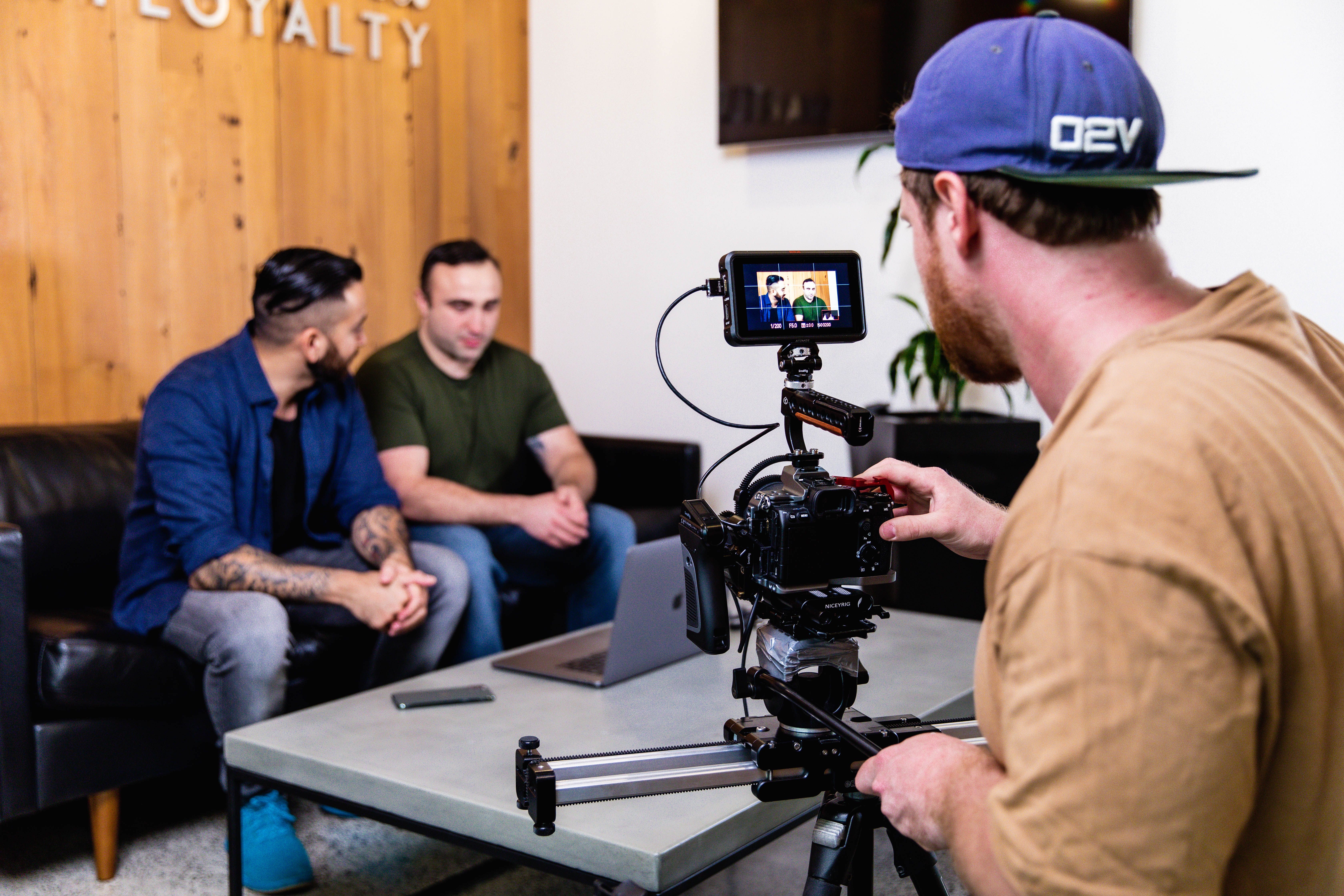
A different location or style of filming also reads as new to Meta. That is why a well-planned shoot day, with several people, settings and angles, can supply an account for months.
How we approach it
We make the content and run the ads within the same team, so new creative is planned into every account each month. Most of the budget runs the ads that are already working, while a smaller share tests new ones. A new ad is judged first on whether people stop and watch, then on whether they click and enquire, and finally on whether those enquiries turn into work. The winners move into the main campaign and the rest are switched off.
New ideas often start in Meta's Ad Library, with ads that businesses in bigger markets have kept running for six months or more. Nobody keeps paying for an ad that doesn't work, so we rebuild those ideas for New Zealand with local people, voices and proof.
Questions to ask about your own account
Four questions will show whether creative is holding your ads back:
- How many ads actually spent money in the last 30 days, and how does that compare with the guide above?
- Do they all come from one shoot, with one person in one setting? If so, Meta probably sees them as one or two ads.
- Is next month's creative planned around different problems, proof, offers, people and formats?
- Are results judged on the enquiries that turn into work, or on the cost of a form fill?
Frequently asked questions
What is Meta Andromeda?
Andromeda is the system Meta introduced in December 2024 to help businesses reach the customers most likely to respond to them. It took the focus away from stacking interests, which you can still do, and uses the content of each ad as the signal for who should see it.
How much should I invest in content?
It depends on your cash flow, but a creative agency will typically charge $4,000 to $8,000 as a one-off project. Before you commit, check what the work is based on: a clear strategy, what is already in your ad account, your ideal customer profiles and, ideally, creative that has already worked in your industry.
My leads have dropped. Should I increase my ad budget?
Usually not straight away: we recommend increasing your creative volume before you increase your ad budget. A drop in leads often means the people seeing your ads have seen them too many times, and fresh, distinct ads tend to bring the cost per lead back down on the same spend.
What kinds of ads work for lead generation businesses in New Zealand?
Meta's system needs creative diversity, so the strongest accounts run a mix of graphics, user-generated content, selfie-style videos filmed on a phone and high-production shoot content. Your audience engages with many different types of creative, so you ideally want to cover all of them instead of leaning on one style.